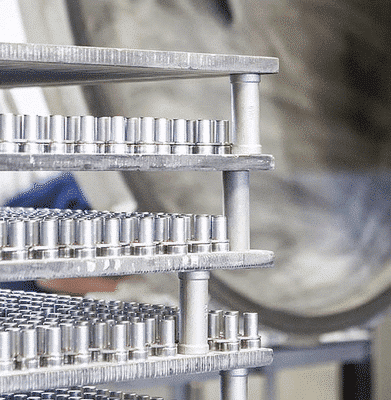
The Advantages of HD Brazing for Industrial Applications
In the world of industrial manufacturing, efficiency, precision, and durability are crucial. One of the leading techniques that meet these demands is HD Brazing. This advanced process has gained recognition for its ability to create strong, reliable joints, making it an ideal choice for various industries. For more information on this process, visit hdbrazing.com.
Understanding the process of HD Brazing
HD Brazing, or High-Density Brazing, is a process where two or more metal parts are joined together using a filler material. This filler material is heated just below the melting point of the base metals, allowing it to flow into the joint through capillary action. The result is a solid, leak-proof bond that can withstand significant mechanical stress and thermal cycling.
The key to HD Brazing lies in its precision and control. Unlike traditional welding, which can cause distortion or warping due to high temperatures, HD Brazing operates at a lower temperature, reducing the risk of damaging the base materials. This makes it particularly suitable for delicate components where maintaining structural integrity is essential.
Why industries are choosing HD Brazing
HD Brazing offers several advantages that make it a preferred method in many industrial sectors. One of the most significant benefits is its ability to join dissimilar metals. In many applications, components made from different metals need to be joined without compromising their individual properties. HD Brazing excels in this regard, providing a strong bond without altering the characteristics of the base metals.
Another advantage is the uniformity of the joint. The process ensures an even distribution of the filler material, resulting in consistent joint strength across the entire bond area. This uniformity is critical in industries such as aerospace and automotive, where even minor inconsistencies can lead to catastrophic failures.
HD Brazing also contributes to overall production efficiency. The process is highly repeatable and can be automated, making it ideal for large-scale manufacturing. Companies can achieve high throughput without sacrificing quality, which is essential in today’s competitive market.
Applications and benefits of HD Brazing
HD Brazing is used across various industries, from electronics to heavy machinery. In the electronics industry, for example, it is used to assemble heat exchangers, which require precise, durable joints that can withstand thermal expansion and contraction. The automotive industry uses HD Brazing for joining components in engines and exhaust systems, where reliability under high temperatures is critical.
Moreover, the process is environmentally friendly compared to other joining methods. Since it operates at lower temperatures and does not require flux, it reduces the emission of harmful fumes and minimizes energy consumption. This not only helps companies meet environmental regulations but also lowers operational costs.
For companies interested in learning more about how HD Brazing can benefit their operations, hdbrazing.com offers extensive resources and expertise. By understanding the process and its advantages, businesses can make informed decisions about incorporating HD Brazing into their manufacturing processes.
The future of HD Brazing in industrial manufacturing
As industries continue to demand more efficient and reliable production methods, HD Brazing is set to play an increasingly important role. Its ability to create strong, precise joints with minimal risk to the base materials makes it a standout choice for manufacturers. With the added benefits of environmental friendliness and cost efficiency, it’s no surprise that more companies are turning to HD Brazing as a solution for their bonding needs.
For those seeking to stay ahead in the competitive manufacturing landscape, exploring the capabilities of HD Brazing could be a game-changer. To dive deeper into this advanced technique, visit hdbrazing.com and discover how it can revolutionize your production processes.


